New Orleans
THE AMERICAS · CITY · CULTURE
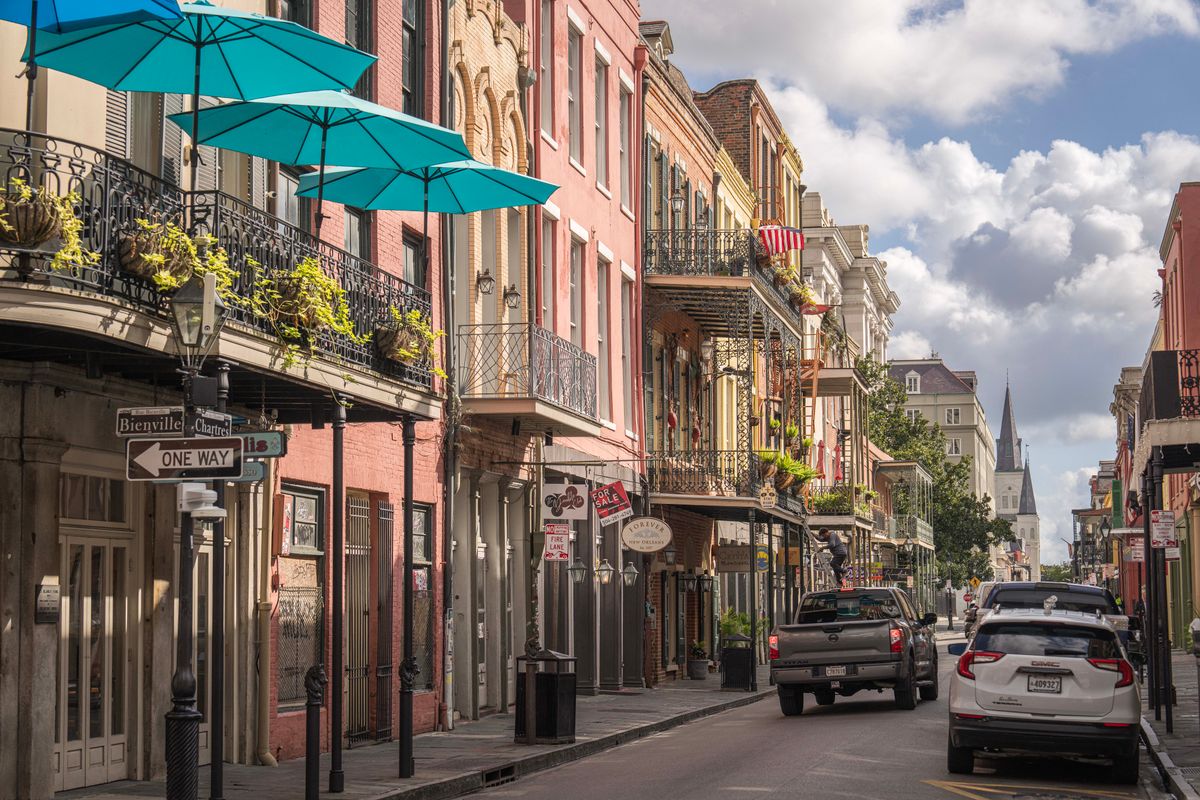
New Orleans doesn't feel like anywhere else in America, because for most of its history it wasn't. French and Spanish colonial, Caribbean, West African and Creole layers stacked on top of each other, in a city below sea level with cast-iron balconies, a brass-band tradition still played on the street, and food that takes itself seriously in a way the rest of the country doesn't.
The plan
Frenchmen Street
Where locals go for live music — three or four brass and jazz clubs in a block, most with no cover. Skip Bourbon.
The French Quarter at 7am
Empty, quiet, and the only time you'll hear the cathedral bells over the crowd. Beignets at Café du Monde after.
Garden District and Lafayette Cemetery
Antebellum mansions along Prytania, reached by the St Charles streetcar, which is a 1920s attraction in itself.
A swamp tour
Ninety minutes out into cypress and Spanish moss with alligators. Small boats beat the airboats for wildlife.
Preservation Hall
Fifty minutes of traditional jazz in a bare room with no drinks and no air conditioning. Unmissable.
Book before you fly
Preservation Hall
Fifty-minute sets, tiny room, and advance tickets are the difference between the front row and the pavement.
Commander's Palace
Book weeks ahead for the jazz brunch; the 25-cent martini lunch is the value.
Mardi Gras & Jazz Fest
Rooms go a year ahead and impose minimum stays.
Getting there
Fly Louis Armstrong (MSY)
Thirty minutes from the Quarter, with direct flights from most US hubs and a few from Europe. The E2 airport bus runs downtown for $1.50.
Take the Amtrak City of New Orleans
From Chicago in nineteen hours, or the Crescent from New York. Union Passenger Terminal is walkable to the Quarter.
Getting around
The Quarter, Marigny and CBD are walkable; St Charles and Canal streetcars cover the rest. You do not want a car here.
When to go
Best time to go
February to May — mild, dry, and the festival calendar runs from Mardi Gras through Jazz Fest.
Cheapest months
July to September, when it is 34°C and humid and hurricane season is live. Rooms are cheapest by far.
Priciest & busiest
Mardi Gras and Jazz Fest, when rooms triple and minimum stays kick in.
If you've got one day
Morning
The French Quarter at 7am
Late morning
Frenchmen Street
Lunch
Café du Monde
Afternoon
Garden District and Lafayette Cemetery
Evening
Dinner at Commander's Palace, then A swamp tour
If you've got a week
Day 1
Arrive, settle in around Hotel Peter and Paul, and take it slowly — Café du Monde for dinner.
Day 2
Frenchmen Street.
Day 3
The French Quarter at 7am. Dinner at Commander's Palace.
Day 4
Day trip — Oak Alley and the River Road.
Day 5
Garden District and Lafayette Cemetery. Cochon at some point.
Day 6
A swamp tour.
Day 7
Preservation Hall. Finish with Willie Mae's Scotch House.
Staying longer?
Nearby & day trips
Oak Alley and the River Road
An hour west for the plantation houses, and the Whitney for the version told from the enslaved side.
Baton Rouge
Ninety minutes upriver, the state capital with a very good LSU game day.
Gulf Coast beaches
Two hours east to Bay St Louis and the Mississippi shore.
The full episode drops on our socials — follow along: