Valencia · Things to do
Checked August 2026 · 5 official sources
THINGS TO DO
Valencia's set pieces are a dry riverbed turned into a nine-kilometre park, a Gothic silk exchange in the middle of the old town, and Calatrava's white complex at the seaward end — with the rice paddies that make the paella ten kilometres south.
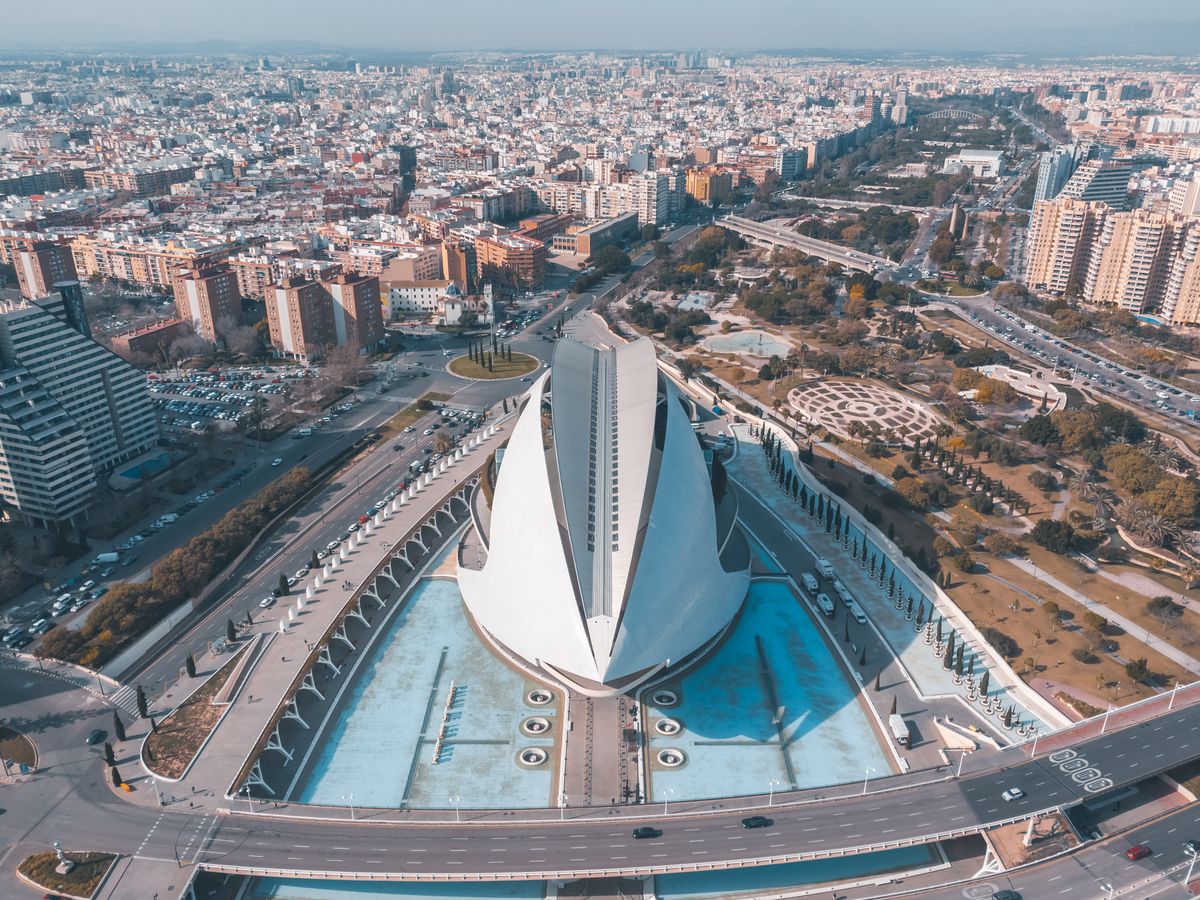
Ciutat de les Arts i les Ciències
Calatrava's complex at the seaward end of the Turia park: the Hemisfèric IMAX dome, the Príncipe Felipe science museum, the Oceanogràfic aquarium and the Palau de les Arts opera house, each ticketed separately or on a combined pass. Allow half a day minimum — the Oceanogràfic alone fills a morning.
📍 Map & photos · $$$ · Website ↗
Mercado Central and La Lonja de la Seda
The 1928 iron-and-glass market hall and the fifteenth-century Gothic silk exchange face each other across one small square. The Lonja is a UNESCO World Heritage site and charges a modest entry fee; the market is free, trades mornings only and closes on Sundays, which makes it a breakfast rather than an afternoon.
📍 Map & photos · $
Jardín del Turia
After the 1957 flood the river was diverted around the city and the old bed became a park roughly nine kilometres long, passing under the medieval bridges. Free, flat and the fastest way to cross Valencia by bike; hire stands sit at several of the ramps down into it.
Valencia Cathedral and the Miguelete
Cultural visits run Monday to Friday 10:30–18:30, Saturday to 17:30 and Sunday from 14:00, and take in the chapel holding the cup the cathedral presents as the Holy Chalice. The Miguelete bell tower is climbed on a separate ticket, open daily 10:00–18:45 from 1 December to 28 February.
📍 Map & photos · $ · Website ↗
L'Albufera and El Palmar
The freshwater lagoon and rice fields about ten kilometres south of the city, reached on the EMT 25 bus. Flat-bottomed boats run short trips from the landing at El Palmar, most people going for the sunset, and the village is where Valencians eat paella — at lunchtime, not dinner.
📍 Map & photos · $