Cebu · Things to do
Checked August 2026 · 5 official sources
THINGS TO DO
The colonial core is small enough to walk in a morning — the Santo Niño basilica, Magellan's Cross, the fort and the old customs house are within a few blocks of each other — while the things most people fly in for are two to four hours south by road.
Basilica Minore del Santo Niño
Home of the Santo Niño image, the country's oldest religious relic, and the centre of the devotion the Sinulog festival is built around every January. Free to enter; expect long queues at the relic on Fridays and through Sinulog week.
Magellan's Cross
The small domed kiosk a minute's walk from the basilica, housing the cross associated with the 1521 arrival of Magellan's expedition. It takes five minutes and costs nothing; combine it with the basilica rather than making a trip of it.
National Museum of the Philippines – Cebu
Housed in the 1910 Aduana, the old customs house on A. Pigafetta St. in Barangay San Roque, designed by American architect William Parsons. National Museum sites are free to enter, and group tours can be arranged in advance by phone or email.
Fort San Pedro
The small triangular Spanish fort by the old port, begun in the 16th century and later rebuilt in coral stone, now enclosing a garden and a few exhibition rooms. A modest entrance fee and half an hour covers it.
📍 Map & photos · $
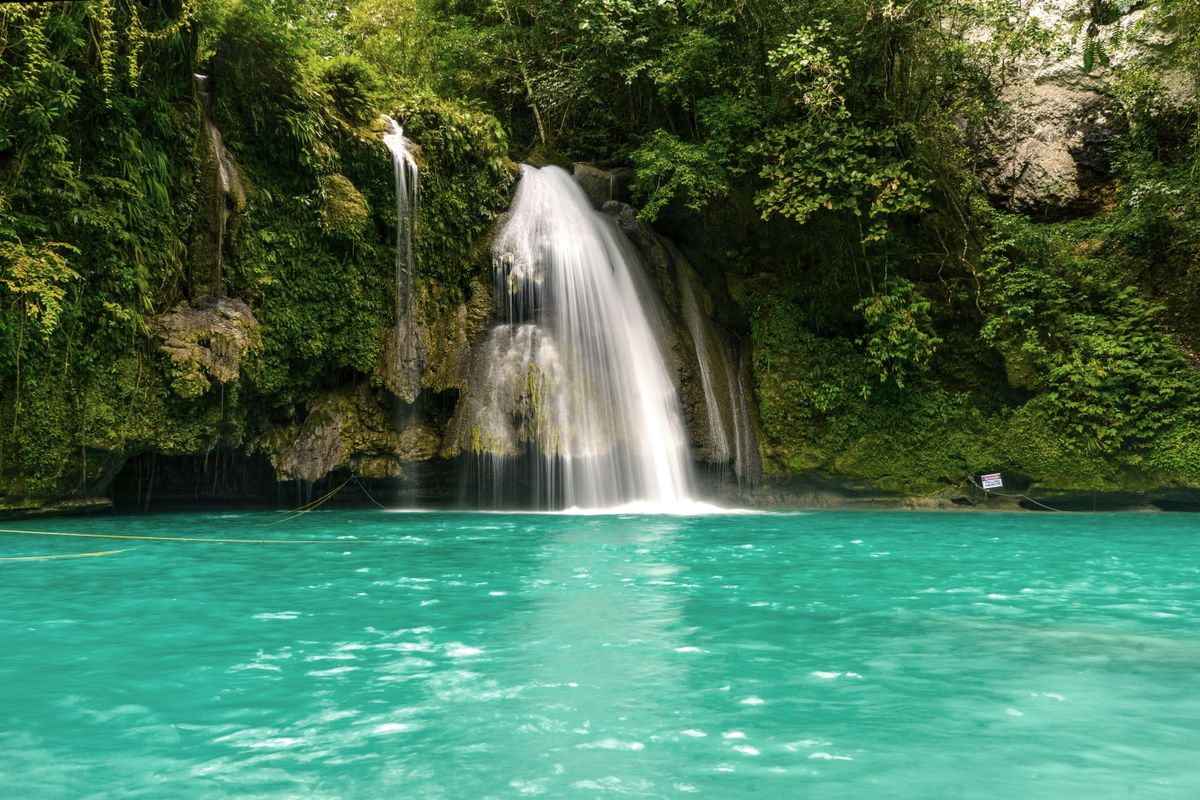
Kawasan Falls, Badian
Turquoise river falls in the south-west of the island, roughly three hours from the city by road or bus. Most visitors arrive on a guided canyoneering trip that starts in Alegria and finishes by jumping down the river; guides, helmets and life jackets are compulsory and the river closes after heavy rain.
📍 Map & photos · $$