Maastricht
Checked 1 September 2026 · 4 official sources
EUROPE · FIESTA SIDE
Closer to Brussels, Liege and Aachen than to Amsterdam, and it shows. Maastricht is Roman in origin, Catholic in temperament and Burgundian at the table.
The plan
Sint Pietersberg caves
Man-made limestone galleries under the hill south of the city, cut for marl since Roman times, with charcoal drawings on the walls and the tunnels that hid Dutch national art during the war. North Caves and Zonneberg are separate tours of about seventy minutes each, guided only, and cold underground all year.
📍 Map & photos · $$ · Website ↗
Vrijthof
The main square, laid over Roman and Frankish burial ground, with the Basilica of Saint Servatius and the red tower of the Sint Janskerk along one side and the terraces facing them. In den Ouden Vogelstruys claims to have been pouring since 1730.
Fort Sint Pieter
An eighteenth-century fortress on the hill above the caves, with underground passages of its own and the best view over the Meuse valley. About an hour, guided, and available on one combination ticket with the North Caves.
📍 Map & photos · $$ · Website ↗
Boekhandel Dominicanen
A thirteenth-century Dominican church turned bookshop, with a black steel stack rising the height of the nave and a cafe in the choir. Free to walk into, and the best twenty minutes in the city.
Helpoort and the walls
The oldest surviving city gate in the Netherlands, built around 1230, with a stretch of medieval wall running from it along the Jeker into the old student quarter.
Getting there
The long way south
Maastricht is the far end of the country, roughly two and a half hours by direct Intercity from Amsterdam and about two from Utrecht. Treat it as a stay rather than a day trip; nobody has ever regretted the second night.
Wyck and the bridges
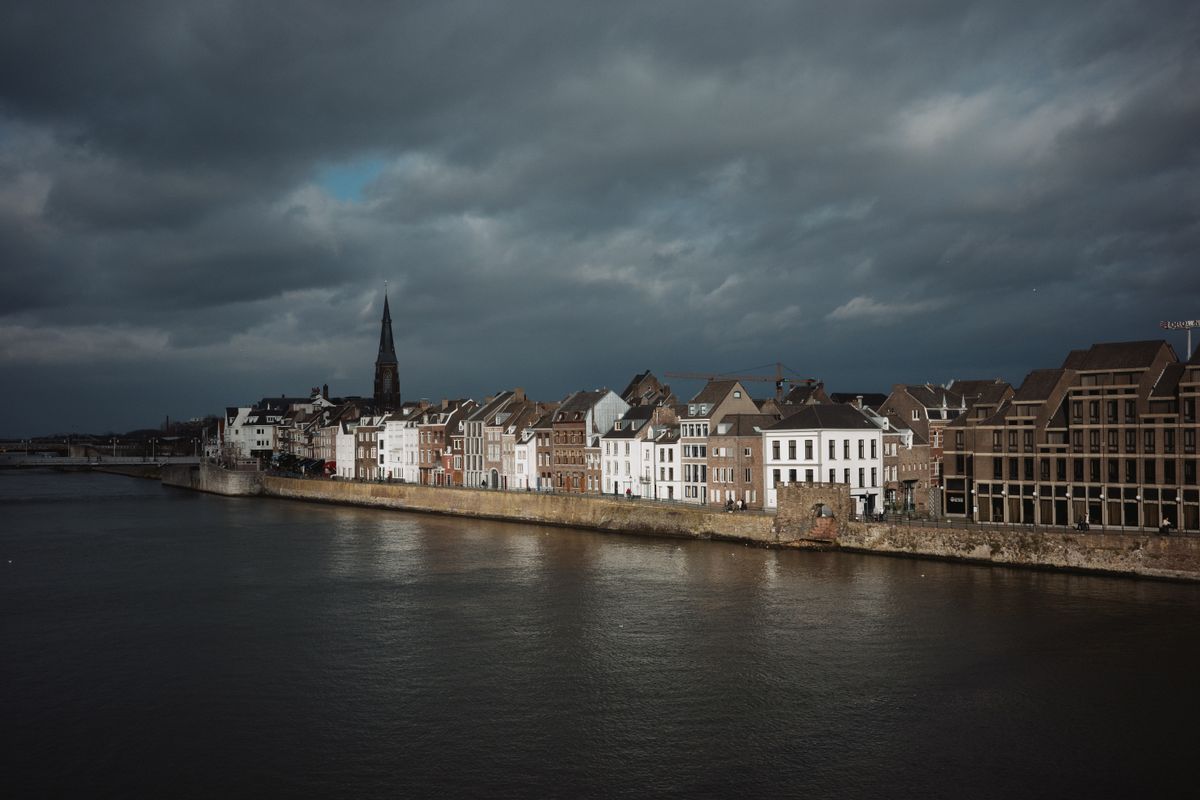
The station is in Wyck on the east bank and the old town is across the water. Walk over the Sint Servaasbrug, parts of it thirteenth-century and the oldest bridge in the country, or the modern Hoge Brug for the view back.
Belgium and Germany are commuter distance
Liege is about half an hour away by train and Aachen has a direct regional service. If you are carrying on into Europe rather than back to Amsterdam, this is the exit.
When to go
Best time to go
May to September, when the Vrijthof terraces are open and the Jekerkwartier is worth a whole evening.
Cheapest months
January and February outside carnival week: the cheapest rooms of the year in a city that stays busy regardless.
Priciest & busiest
Carnival, TEFAF in March, and the open-air concerts on the Vrijthof in July and August.
If you've got one day
Morning
The Vrijthof and the Basilica of Saint Servatius, then across the square to the Sint Janskerk and its red tower.
Late morning
Boekhandel Dominicanen, then the Jekerkwartier: the Helpoort, the wall, the mills on the Jeker and the old university buildings.
Lunch
A long one. This is the Dutch city where lunch is a meal rather than a sandwich, and Wyck and the Jekerkwartier both do it properly.
Afternoon
Up the Sint Pietersberg for the caves and the fort, both guided and both worth booking before you arrive.
Evening
Over the bridge to Wyck for dinner, then back for a beer on the Vrijthof or something loud at the Muziekgieterij.
Nearby & day trips
Valkenburg
Fifteen minutes east by train: castle ruins on the hill, marl caves of its own, and Christmas markets held inside them from November.
Aachen and Liege
Two foreign cities within the hour by train, Charlemagne's cathedral one way and a Belgian food city the other.
The full episode drops on our socials — follow along: