Fes · Things to do
Checked August 2026 · 5 official sources
THINGS TO DO
Fes el-Bali is the point: a walled medieval city of some 280 hectares with a 9th-century university at its centre, and the rest of the list is really about which doors inside it you are allowed through.
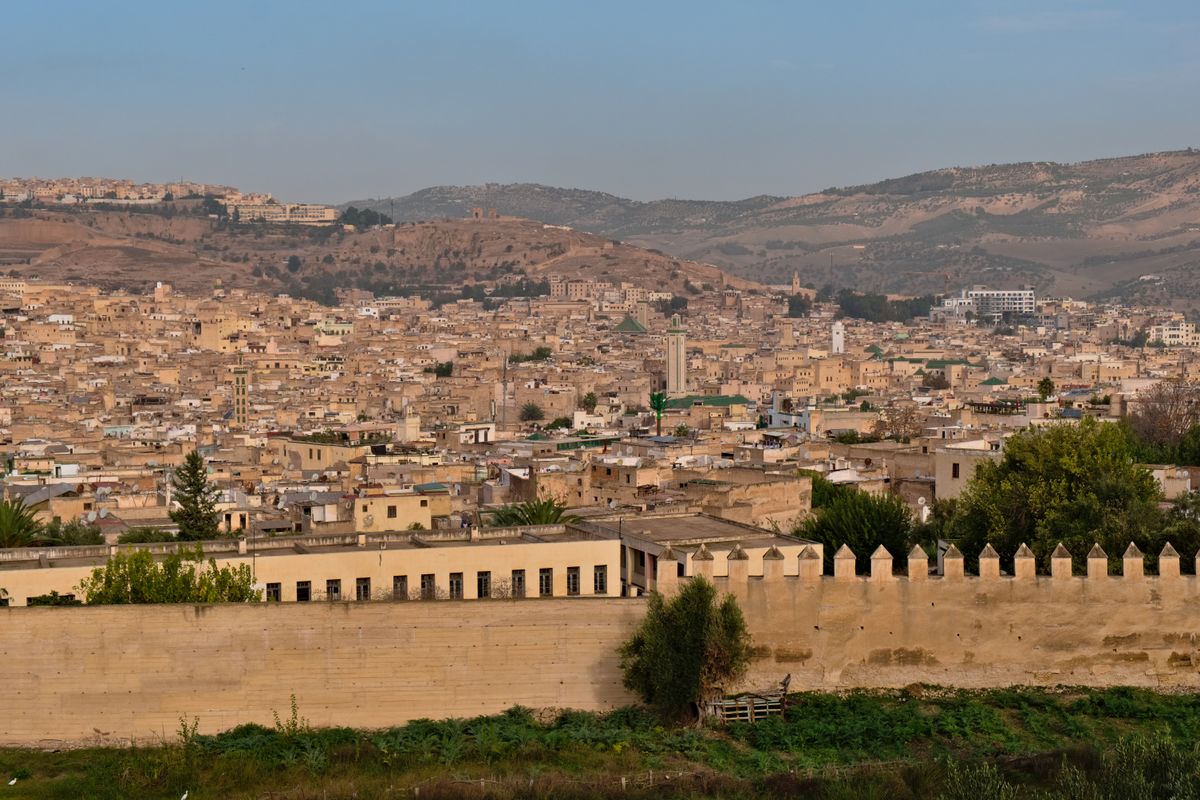
Fes el-Bali, from Bab Boujloud down Talaa Kebira
The blue gate on the medina's western edge is the usual way in, and Talaa Kebira runs downhill from it through the food and craft quarters. UNESCO dates the founding to between 789 and 808 AD; the walled city is one of the largest surviving Arab-Muslim historic towns and it is entirely on foot.
Al-Qarawiyyin
The mosque and teaching institution at the heart of the medina, founded in 859 and described by UNESCO as the world's oldest university. The prayer hall is open to Muslims only, but you can see into the courtyard from the doorways on Rue Boutouil and the restored library sits alongside it.
Bou Inania Madrasa
A 14th-century Marinid teaching college just inside Bab Boujloud on Talaa Kebira, and one of the few religious buildings in Fes non-Muslims can enter. Carved cedar, stucco and zellij tilework around a marble courtyard; small entry fee, and it closes to visitors at prayer times.
📍 Map & photos · $
Chouara Tannery
The stone dye pits in the leather quarter, worked by hand and viewed from the terraces of the leather shops that surround them. Shopkeepers hand you mint at the door and expect a tip or a look at the stock on the way out; the smell is real and mornings are the busiest.
📍 Map & photos · $
Musée Al Batha des arts de l'Islam
The Batha palace museum, run by Morocco's Fondation Nationale des Musées and reopened after a full restoration, holding Fassi ceramics, woodwork and Islamic art in an Andalusian-style garden courtyard. Foundation museums generally open 10:00-18:00; check its page before going.
📍 Map & photos · $ · Website ↗