Vientiane · Backpacking
Checked 31 August 2026 · 4 official sources
ON A BUDGET
Vientiane is one of the cheapest capitals in Asia to exist in — the line item that actually moves your budget is the Laos–China Railway, not your bed.
What a day costs
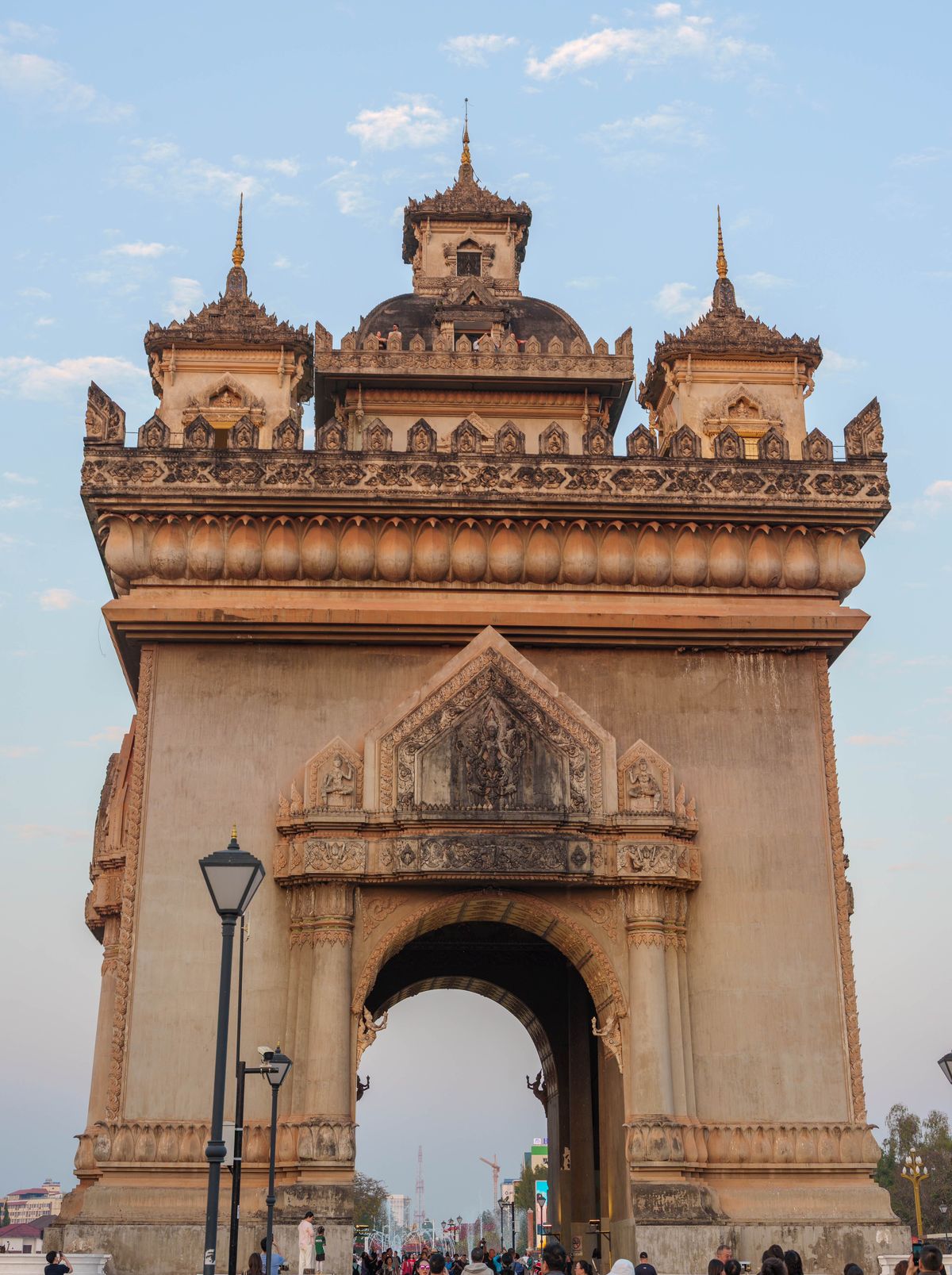
Sightseeing is nearly free: Patuxai is 3,000 kip to climb, the Lao National Museum is 30,000 kip for foreigners, the COPE Visitor Centre costs nothing, and the riverfront sunset is the best free thing in the city. Market food and a Beerlao keep a whole day well under the price of one train ticket.
📍 Map & photos · $
The train is the one big cost
Laos–China Railway fares rose about nine percent on 1 April 2026. Vientiane to Luang Prabang is now 360,000 kip in second class and 569,000 kip in first; Vientiane to the Chinese border at Boten is 605,000 and 961,000 kip.
📍 Map & photos · $$ · Website ↗
Book rail tickets seven days out
Domestic seats go on sale at 6.30am exactly seven days before departure, through the LCR Ticket app or a station and downtown ticket office. Offices add a 20,000 kip service fee per ticket and need passport details for every passenger.
📍 Map & photos · $
City buses, not tuk-tuks
The state bus company runs numbered routes from the central station beside Talat Sao — bus 14 down to Buddha Park, bus 28 out to Khamsavath railway station. Fares are a few thousand kip against several tens of thousands for a tuk-tuk.
📍 Map & photos · $
Carry small notes
Laos runs on cash and street vendors, buses and market stalls rarely have change for a 100,000 kip note, which is what ATMs hand out. Break big notes in a supermarket or a cafe early in the day.