Bologna
Checked 1 September 2026 · 4 official sources
EUROPE · FIESTA SIDE
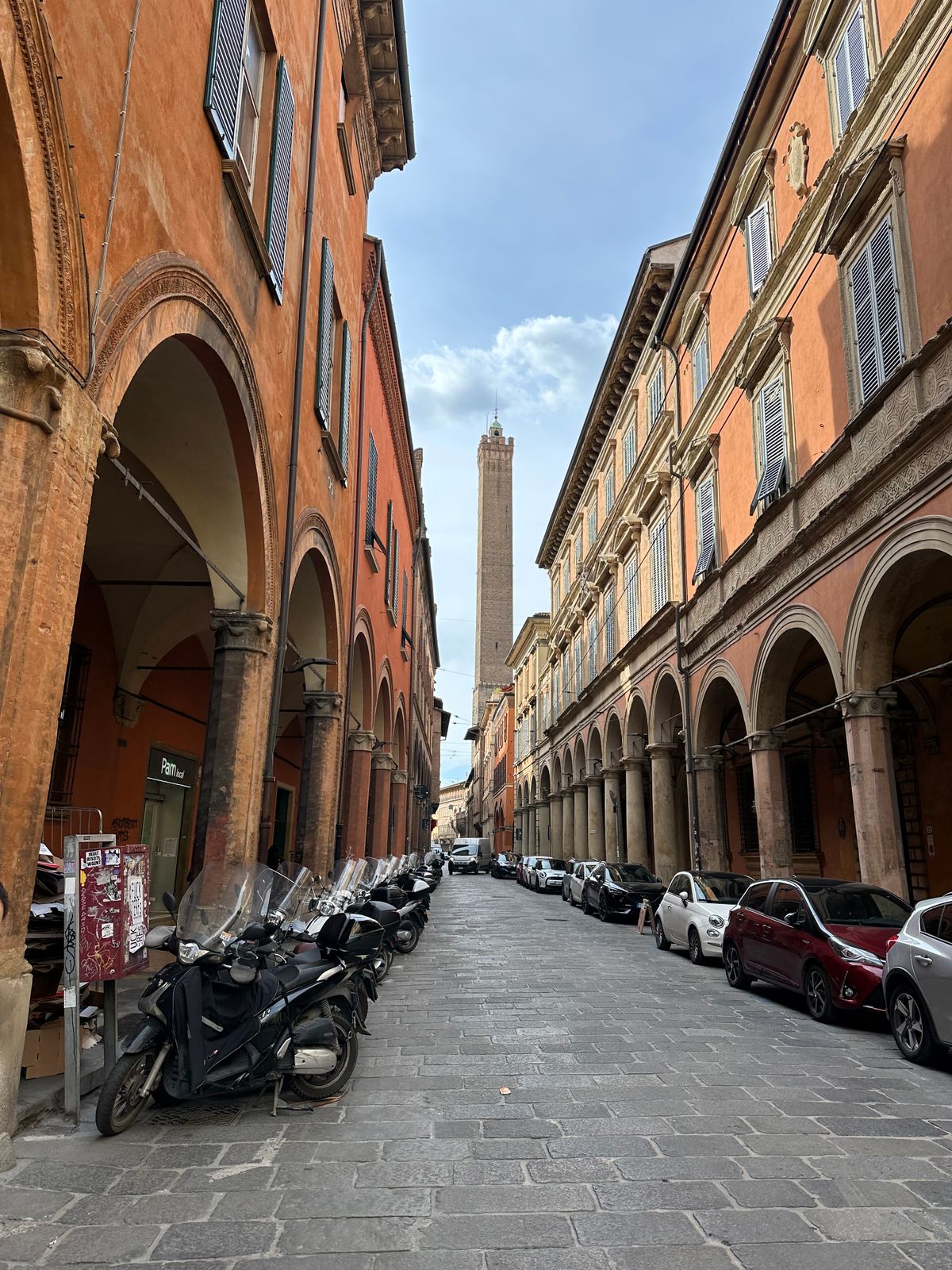
Kilometres of covered porticoes, Europe's oldest university and the food most of the world means by Italian. Red-brick, student-run and largely unbothered by tourism.
The plan
Piazza Maggiore and San Petronio
One of the largest brick churches in the world, its facade abandoned half-clad in marble in the sixteenth century. Inside, Cassini's brass meridian line runs the length of the floor with a hole in the vault above it. Free to enter; a small charge to take photographs.
The two towers
Asinelli and Garisenda lean over Porta Ravegnana. Asinelli is currently closed while work goes on around the leaning Garisenda, and Bologna Welcome is selling the Clock Tower in Piazza Maggiore in its place. When Asinelli reopens it is 498 steps with no lift, around €5 for adults, and booking is compulsory.
📍 Map & photos · $ · Website ↗
Portico di San Luca
The longest portico in the world climbs from Porta Saragozza to the Sanctuary of the Madonna di San Luca on the hill above the city. It is a steady uphill hour under continuous arches; the San Luca Express road train covers the same ground for €15 if you would rather not walk.
The Quadrilatero
The medieval market grid behind Piazza Maggiore, where mortadella, tortellini, fish and parmigiano are sold from shopfronts that spill into the lanes. Busiest late morning and thin by mid-afternoon.
📍 Map & photos · $
Santo Stefano
Seven linked churches around a courtyard, built and rebuilt from late antiquity onwards, including a round church over what was a temple to Isis. Free, and the calmest place in the centre.
Getting there
Bologna Centrale is the hinge
Every north-south high-speed train stops here: roughly 37 minutes to Florence, about an hour to Milan and a little over two to Rome. The high-speed platforms are buried several levels underground, so allow ten minutes to get up to the street.
Marconi Express from the airport
An automated people mover runs from Guglielmo Marconi airport to Bologna Centrale in about seven minutes, every few minutes through the day.
Walk, under cover
The centre is compact and the porticoes mean rain never stops you. Driving is pointless: the historic centre is a camera-enforced limited-traffic zone and parking inside it barely exists.
When to go
Best time to go
April to June and September to October: warm, and the university term keeps the city awake.
Cheapest months
January and February are cheapest, cold and foggy, which is exactly the weather the food was designed for.
Priciest & busiest
Trade-fair weeks, particularly Cersaie in September and Arte Fiera in winter, when hotel rates spike without warning.
If you've got one day
Morning
Piazza Maggiore, the meridian line inside San Petronio, then a lap of the Quadrilatero while the stalls are still full.
Late morning
The Archiginnasio, the university's old seat, and its wooden anatomical theatre with the skinned figures holding up the canopy.
Lunch
Tagliatelle al ragù or tortellini in brodo at an osteria. Nobody here serves what the rest of the world calls spaghetti bolognese.
Afternoon
Walk the San Luca portico up the hill for the view back over the roofs, or take the road train up and walk down.
Evening
Aperitivo on Via del Pratello, then a late set at a jazz cellar and dinner whenever it suits.
Nearby & day trips
Modena
About twenty minutes by train: balsamic vinegar acetaias, a Romanesque cathedral and, at Maranello nearby, the Ferrari museum and factory circuit.
Ravenna
Just over an hour east, for Byzantine mosaics in San Vitale and Galla Placidia that are the best surviving anywhere, and Dante's tomb.
The full episode drops on our socials — follow along: