Jaipur · Things to do
Checked August 2026 · 7 official sources
THINGS TO DO
Jaipur's sights are dense and mostly 18th-century — a ridge fort, a working royal palace, a masonry observatory that is a UNESCO site, and a serious block-printing museum up in Amer — all inside about 12 km of each other.
Amber Fort (Amer Palace)
The hillside fort-palace 11 km north of the city that most people give a half-day to; the Sheesh Mahal mirror hall and the Ganesh Pol gate are the parts worth the queue. Arrive at opening time to get ahead of both the heat and the coach parties, and walk up the ramp rather than taking an elephant.
📍 Map & photos · $ · Website ↗
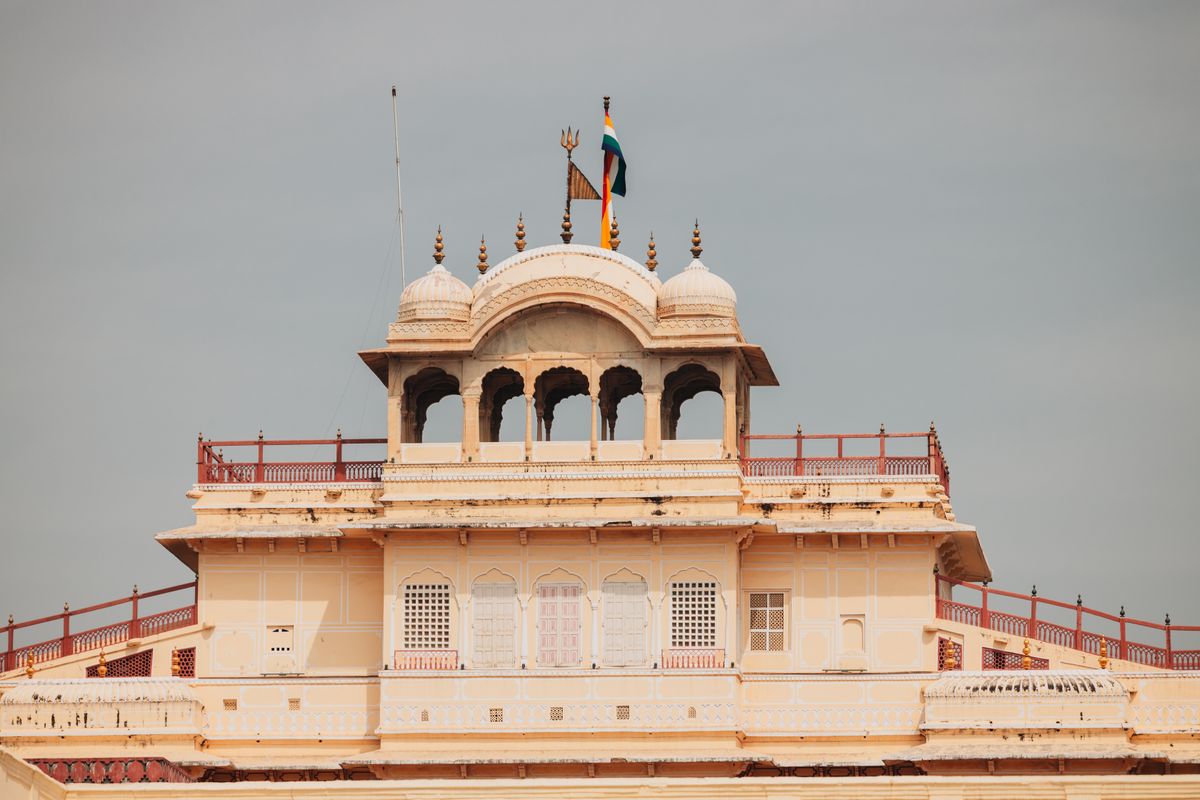
The City Palace, Jaipur
The working royal palace in the middle of the old city, open 09:30–18:30 seven days a week and closed only on Dhulandi, the second day of Holi. There are two entrances, one beside Jantar Mantar and one at Jaleb Chowk; the courtyards and the textile and armoury galleries are the standard ticket, and the Chandra Mahal residence is a separate and dearer one.
📍 Map & photos · $$ · Website ↗
Jantar Mantar
Jai Singh II's early-18th-century masonry observatory next door to the City Palace, and a UNESCO World Heritage site: about twenty fixed instruments built for naked-eye astronomy, several of them the largest of their type ever made. It makes far more sense with a guide or the audio guide than without one.
📍 Map & photos · $ · Website ↗
Anokhi Museum of Hand Printing
A restored haveli at Keri Gate in Amer given over to hand-block printing, with printers and block-carvers working in front of you. Open Tuesday to Saturday 10:30–17:00 and Sunday 11:00–16:30, closed Mondays, and shut every year from 31 May to 15 July for gallery maintenance. Easily combined with Amber Fort, about a kilometre away.
📍 Map & photos · $ · Website ↗
Hawa Mahal
The five-storey pink screen wall on Badi Chaupar, built in 1799 so the women of the palace could watch the street unseen. The facade is the whole point and it faces east, so it photographs best in the morning from the road opposite; the ticketed interior is a series of narrow ramps and small windows and takes about twenty minutes.
📍 Map & photos · $