Westfjords
Checked 1 September 2026 · 7 official sources
EUROPE · SIESTA SIDE
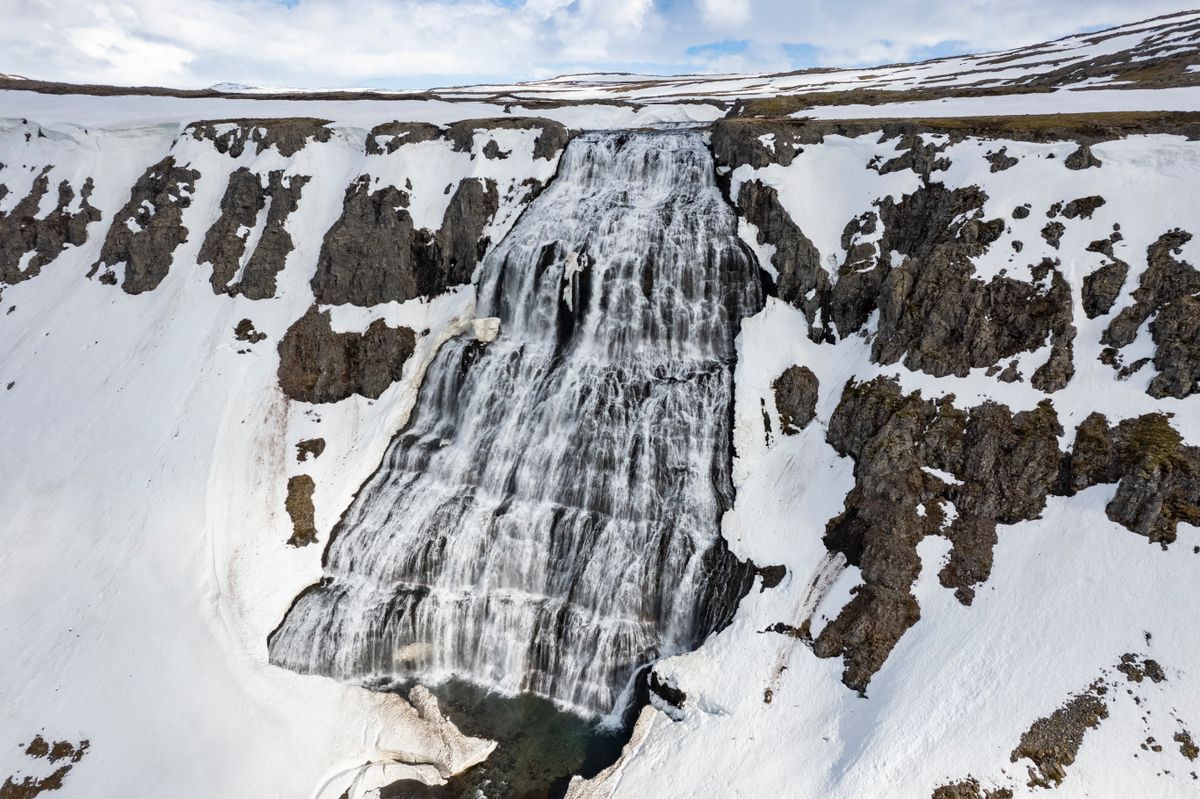
A hand of fjords in the far north-west with about seven thousand people in it: Europe's largest bird cliff, Iceland's most beautiful waterfall, and hours of road with nothing on it.
The plan
Dynjandi
A hundred metres of water spreading down a rock face like a veil, with five smaller falls below it — Hundafoss, Strokkur, Göngumannafoss, Hrísvaðsfoss and Sjóarfoss — passed on the way up. Fifteen minutes from the car park to the main fall, three quarters of an hour to an hour for the lot. Parking carries a service fee and there are flush toilets year-round. Protected since 1981.
📍 Map & photos · $ · Website ↗
Látrabjarg
Fourteen kilometres of cliff rising to 441 metres at the western tip of Europe, with puffins, razorbills, guillemots and fulmars in numbers that are hard to process. Best from late spring through July. The ground at the lip is honeycombed with nesting burrows and gives way without warning — stay well back, do not lie down for the photograph, and turn round in fog or high wind.
Rauðasandur
A long beach of red and gold shell sand under the cliffs on the south coast of the peninsula, reached down a steep gravel switchback. It looks nothing like the rest of Iceland and is usually empty. One café, open in summer.
Hornstrandir
An abandoned peninsula with no roads at all, reached only by boat from Ísafjörður or Bolungarvík. The arctic foxes have never been hunted here and are not afraid of you. Camp only where designated, no dogs, no drones, and file a travel plan if you go before 15 June. The ranger centre is on Silfurgata in Ísafjörður.
📍 Map & photos · $$$ · Website ↗
Ísafjörður
The capital of the region: under three thousand people on a sand spit beneath vertical mountains, with the best restaurants for two hundred kilometres and the eighteenth-century timber warehouses of the Westfjords Heritage Museum on the point.
Getting there
It is a long way, and that is the point
Ísafjörður is 455 kilometres from Reykjavik via Hólmavík, all asphalt, or 410 via Dynjandi with seventeen kilometres of gravel in it. Either is seven to nine hours with stops. Patreksfjörður is 392 kilometres, Hólmavík 233. Nothing here is quick.
Fly, or take the ferry
Icelandair flies Reykjavík to Ísafjörður in forty to fifty minutes and it is the quickest way in by a distance. The Baldur car ferry from Stykkishólmur to Brjánslækur via Flatey cuts the southern approach right down: two sailings a day from mid-June to late August, fewer in winter, and book ahead with a vehicle.
Gravel, passes and winter
The trunk roads are paved but the spurs to Látrabjarg, Rauðasandur and the far north are gravel, and several mountain passes are simply not maintained in winter. These are not F-roads, so a 4x4 is not legally required, but ground clearance and decent tyres decide how far you get. Check umferdin.is every single morning.
When to go
Best time to go
Late June to mid-August: everything open, puffins on the cliffs, the passes clear and the ferry running twice a day.
Cheapest months
Early June and September, when the gravel is dry, the guesthouses are still open and you can drive an hour without meeting another car.
Priciest & busiest
The fortnight either side of the Verslunarmannahelgi weekend in early August, which is as busy as the Westfjords ever get.
If you've got one day
Morning
From Patreksfjörður, take the gravel out to Látrabjarg early and walk the cliff top while the puffins are still sitting on the ledges.
Late morning
Back east and down the switchback to Rauðasandur for an hour on red sand under the cliffs.
Lunch
Patreksfjörður, or the café at Hnjótur. Assume whatever you pass is the last food for two hours, because it usually is.
Afternoon
North over the Dynjandisheiði pass to Dynjandi, and the walk up past the five lower falls to the big one.
Evening
On to Þingeyri or Ísafjörður, stopping at a roadside hot pot — Hellulaug at Flókalundur sits on the shore itself, a few metres above the tideline.
Nearby & day trips
Flatey
A flat island in Breiðafjörður where the Baldur ferry calls: a few dozen people in summer, no cars, painted houses and the oldest library building in Iceland. Get off, walk it, and take the next sailing.
Strandir
The east coast, up Route 643 towards Norðurfjörður: the derelict herring factory at Djúpavík, the Museum of Sorcery at Hólmavík, and Krossneslaug, a pool built on a stony beach at the end of the road.
The full episode drops on our socials — follow along: