South Coast
Checked 1 September 2026 · 5 official sources
EUROPE · FIESTA SIDE
Waterfalls you can walk behind, glacier tongues within sight of the road, and a black beach that has killed people. Route 1 east is Iceland's busiest two hundred kilometres.
The plan
Seljalandsfoss
Sixty metres off an old sea cliff, with a path that goes the whole way round behind the curtain. You will get wet; the back path is roped off whenever it ices up. Walk five hundred metres north to Gljúfrabúi, hidden inside a slot canyon, and you will lose most of the crowd. Parking is charged.
📍 Map & photos · $
Skógafoss
A sheet of water sixty metres wide that you can stand directly under, with a steel staircase up the flank to a platform above and the start of the Fimmvörðuháls trail over the pass to Þórsmörk beyond it. Rainbows on any bright afternoon.
Reynisfjara — read this before you go
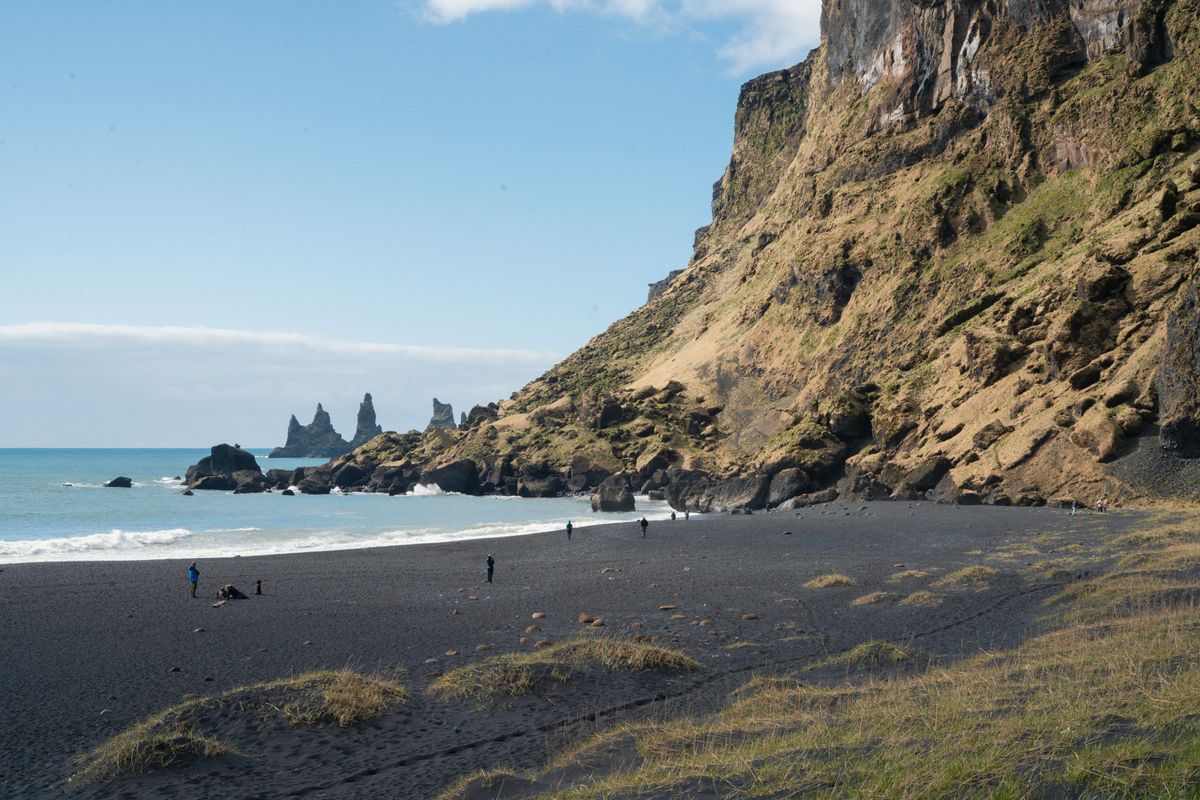
The black beach west of Vík has a colour-coded warning system on the approach, and it exists because sneaker waves here have killed at least six people since 2007, most recently in 2025 at the Hálsanefshellir cave. When the warning is red, the cave and the basalt columns are closed. Stay high on the sand, never turn your back on the water, do not let children run ahead, and treat the sea as if it wants you.
📍 Map & photos · $ · Website ↗
Sólheimajökull
A glacier tongue you can drive right up to and walk on with a guide. Icelandic Mountain Guides run an easy two-and-a-half-hour walk on it year-round from around USD 140, crampons and axe included, and a longer hike-plus-ice-cave version from November to April. Never step onto the ice on your own: the crevasses are covered and the terminus collapses.
📍 Map & photos · $$$ · Website ↗
Dyrhólaey
The arch and lighthouse on the headland west of Vík, with puffins on the grassy slopes in summer and the black coast running east below. Parts of the reserve close during nesting and the road up to the high point is steep — check the day's status with the ranger before driving it.
Getting there
Route 1 east, and no 4x4 needed
Seljalandsfoss is about two hours from Reykjavik and Vík about two and a half, all on tarmac. What closes this road in winter is wind and ice, not the surface, and it closes with little notice.
Wind is the real constraint
Gusts here routinely reach the point at which your hire company's insurance stops covering the door you are opening — car door damage is the single most common claim in Iceland. Check umferdin.is and the Met Office wind map every morning, and never open a door into a gale.
A day trip, or a base
It can be done as a very long day from Reykjavik, and thousands do. Two nights at Hvolsvöllur or Vík turns it into a proper visit and gets you onto Reynisfjara before the first coach at nine.
When to go
Best time to go
June to August: everything open, roads dry, and light enough to keep going until midnight.
Cheapest months
October, and February to March, when the ice caves are running, the aurora is out and the guesthouses are half empty.
Priciest & busiest
July, plus the week between Christmas and New Year, when Vík's small stock of rooms goes first and goes dear.
If you've got one day
Morning
Out of Reykjavik by seven. Seljalandsfoss first, round the back of the falls, then the short walk north into Gljúfrabúi's canyon.
Late morning
Skógafoss, and the long staircase to the platform above it for the view down the whole coastal plain.
Lunch
Vík, or the café at the Skógar museum. Options thin out fast east of here, so eat when the chance appears.
Afternoon
Dyrhólaey for the arch, then Reynisfjara — read the warning board at the entrance, stay well up the beach, and skip the cave entirely if the sign is red.
Evening
Into Vík for the black-roofed church on the hill and dinner. On a clear winter night the aurora over the Reynisdrangar stacks is the whole reason you drove out.
Nearby & day trips
Þórsmörk
A birch valley ringed by three glaciers, reachable only by fording the Krossá on F249. No hire car is insured for that crossing and people write cars off there every summer. The highland buses from Reykjavik and Hvolsvöllur are built for it and run through the season.
Vestmannaeyjar
The Westman Islands, about half an hour by ferry from Landeyjahöfn: a town half-buried by the 1973 eruption, the largest puffin colony in the world, and a volcano you can walk up before lunch. The crossing reroutes to Þorlákshöfn in rough weather.
The full episode drops on our socials — follow along: