Jökulsárlón
Checked 1 September 2026 · 6 official sources
EUROPE · SIESTA SIDE
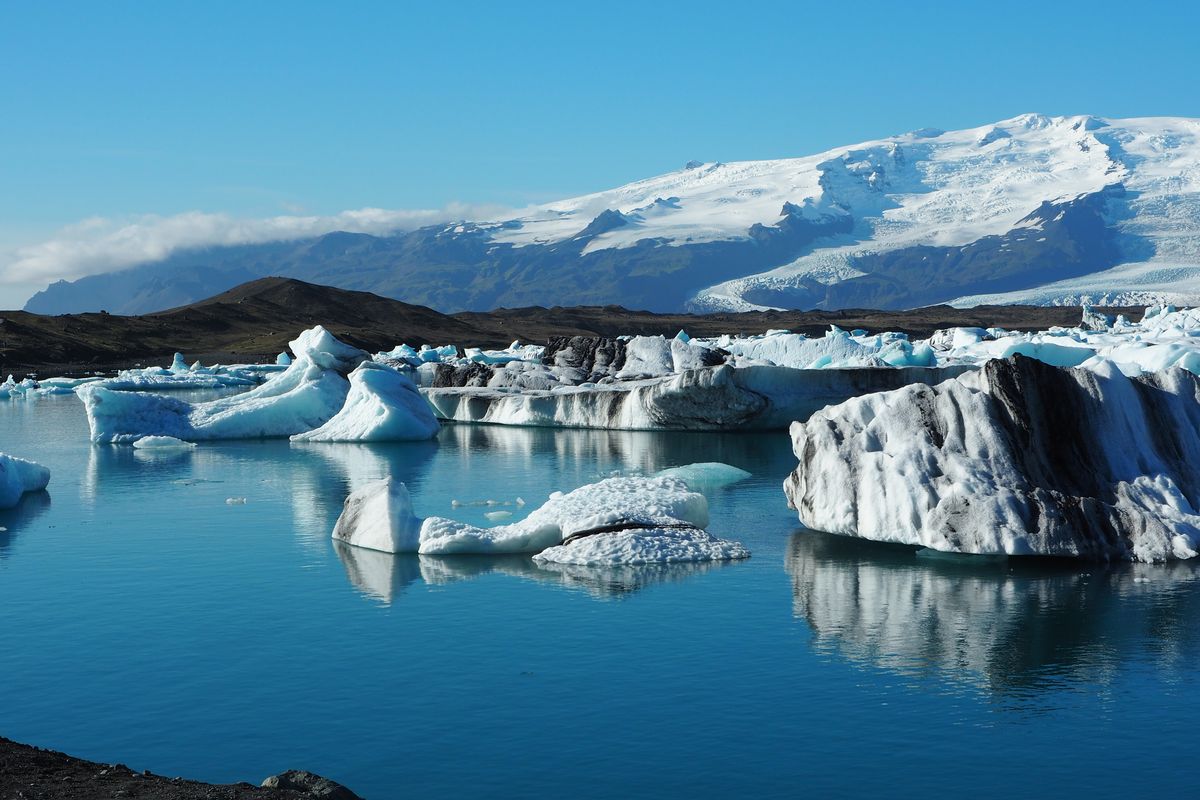
A lagoon full of icebergs calving off Vatnajökull, a beach where they wash back up polished on black sand, and guided caves under the glacier behind it.
The plan
Jökulsárlón glacier lagoon
Icebergs from Breiðamerkurjökull drifting down a lagoon that did not exist before the 1930s and is still getting bigger as the glacier retreats. Free to stand and look at, at any hour and in any season, and the seals stay through the winter.
Out among the icebergs by boat
Amphibian trucks run May to November, 30 to 40 minutes, 7,100 ISK for adults and 3,500 ISK for children 6 to 12, leaving every half hour in high season. Zodiacs go further out and closer in: May to October, an hour and a quarter, 16,600 ISK, minimum height 130 cm. Book in summer.
📍 Map & photos · $$$ · Website ↗
Diamond Beach
The black sand across the road, where the bergs that make it out to sea are thrown back in polished like glass. Best under a low sun. The same rule applies as at Reynisfjara: the waves here are heavy and unpredictable, and standing on an iceberg at the waterline is how people get hurt.
Ice caves under Vatnajökull
The natural blue caves are a winter activity and a guided-only one: roughly October or November to April, reached by super-jeep with a licensed operator. Reckon on about 24,900 ISK for a crystal cave trip and 36,900 ISK for the longer blue-ice one, meeting near Hali outside Höfn. They melt out and re-form every year, so no two seasons run the same caves.
📍 Map & photos · $$$ · Website ↗
Skaftafell and Svartifoss
The green wedge under Vatnajökull, with a visitor centre open all year. The S2 loop is 5.8 kilometres and about two hours, taking in the basalt-column waterfall and the view out over the sand plain.
📍 Map & photos · $ · Website ↗
Getting there
It is a long way east
Jökulsárlón is about 370 kilometres from Reykjavik on Route 1: five to six hours without stopping, and nobody sensible drives it in a day. Höfn is an hour further on, Vík two and a half back the other way.
Paved all the way, but winter is different
No 4x4 is needed to reach the lagoon. The run across Skeiðarársandur is completely exposed and shuts in storms, and glacial floods have taken the bridges here before. Check umferdin.is the morning you drive it, not the night before.
Tours from Reykjavik exist and are brutal
Day coaches to the lagoon run fourteen to sixteen hours. Two or three nights based at Kirkjubæjarklaustur, Hof or Höfn costs less in the end and gives you the daylight to use.
When to go
Best time to go
Late May to September: boats running, long light, and the Skaftafell trails clear of snow.
Cheapest months
May and late September into October — boats still sailing, ice caves just starting, and rates well off the summer peak.
Priciest & busiest
July and August for the lagoon itself, and November to March for ice caves, when the guided slots sell out weeks ahead.
If you've got one day
Morning
Be at Jökulsárlón before nine. The bergs shift with the tide, the light is best early, and the car park is empty at that hour.
Late morning
Cross the road to Diamond Beach, then drive ten minutes west to Fjallsárlón, which is smaller, closer to the glacier face and far quieter.
Lunch
Höfn for langoustine, an hour east, or the café at the lagoon if you are heading the other way.
Afternoon
The zodiac out among the icebergs, or west to Skaftafell for the walk up to Svartifoss and back.
Evening
Stokksnes and Vestrahorn under a low sun if you are staying at Höfn. Otherwise the lagoon again, empty, with the ice cracking in the dark.
Nearby & day trips
Höfn
A working fishing town under the glacier, an hour east, and the place to eat langoustine. It is also where most of the ice cave operators are based, and the last real supermarket for a long way.
Stokksnes and Vestrahorn
A black gabbro mountain standing behind black dunes and a shallow lagoon, on private land east of Höfn with a small fee paid at the café gate. The reflection everyone photographs needs a still day and a low tide, and you will not get both often.
The full episode drops on our socials — follow along: