Akureyri
Checked 1 September 2026 · 6 official sources
EUROPE · FIESTA SIDE
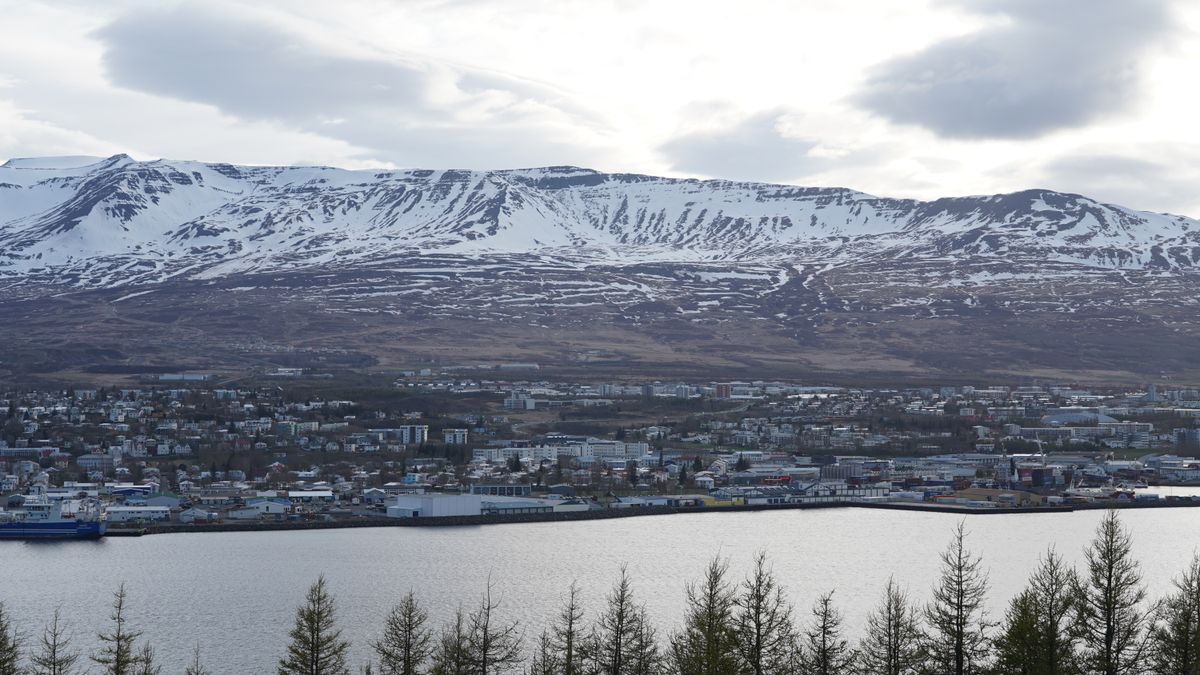
Iceland's northern capital: twenty thousand people at the head of a long fjord, a botanical garden that should not survive this far north, and world-class whale watching an hour away.
The plan
Whale watching from Húsavík
Ninety minutes east on Skjálfandi bay. North Sailing's Original tour sails daily from 1 March to 30 November on a converted oak fishing boat, takes about three hours, and costs 12,990 ISK for adults and 6,990 ISK for children 7 to 15, under sevens free. They put their sighting rate above 97% across three decades. Overalls and hot chocolate are handed out on board.
📍 Map & photos · $$$ · Website ↗
Goðafoss
The waterfall of the gods, where the lawspeaker is said to have thrown his heathen idols in around the year 1000 after Iceland voted to convert. Free, straight off Route 1, with marked paths and viewpoints on both banks.
Lake Mývatn
Pseudocraters at Skútustaðir, the lava formations of Dimmuborgir, the boiling mud at Hverir and the Krafla caldera, all within twenty minutes of each other about 89 kilometres east of Akureyri. The midges in June and July are not a joke — bring a head net.
GeoSea
Geothermal seawater baths on the cliff above Húsavík harbour, looking out over the bay you were whale watching in. Adults 7,490 ISK, children 6 to 16 3,990 ISK, open noon to ten, towel hire 1,590 ISK. Pre-booking is advised but not required.
📍 Map & photos · $$ · Website ↗
Forest Lagoon
Two pools at 37°C cut into the woods across the fjord, five minutes from the centre of Akureyri, open from nine in the morning until midnight with everyone out by half eleven. Standard entry 7,490 ISK, with a Finnish sauna and a cold plunge included.
📍 Map & photos · $$ · Website ↗
Getting there
Fly, or drive most of a day
Akureyri is about forty minutes in the air from Reykjavík Airport in the middle of the capital, against four and a half to six hours on Route 1. In winter the flight is the one that actually happens.
The ring road north is paved and can still shut
Öxnadalsheiði west of town and the heaths east of it close in storms. Check umferdin.is before you commit: a closed pass means a four-hundred-kilometre detour, or a night wherever you are.
A car earns its keep up here
Goðafoss is 45 minutes east, Mývatn about 89 kilometres, Húsavík an hour and a half. Dettifoss is reached on road 862 down the west bank, which is paved; the east-bank 864 is gravel and summer only.
When to go
Best time to go
June to August: whales at their most reliable, midnight sun, and every road in the north open.
Cheapest months
September and October — boats still sailing to the end of November, the aurora already back, and prices off the peak.
Priciest & busiest
July, plus the Verslunarmannahelgi long weekend in early August, when Icelanders take the north over entirely.
If you've got one day
Morning
East at seven for Húsavík and the morning boat. Three hours on Skjálfandi with humpbacks and minke, and blue whales in a good year.
Late morning
Back on land: GeoSea on the cliff above the harbour, or the Whale Museum in the old slaughterhouse below it.
Lunch
Húsavík harbour for fish soup. The town's Eurovision film fame is milked without embarrassment and the coffee is good.
Afternoon
South to Mývatn: Dimmuborgir, the pseudocraters at Skútustaðir, and the mud pots at Hverir on the pass over.
Evening
Soak at the Earth Lagoon by Mývatn, or drive back for dinner in Akureyri and the bars off Ráðhústorg.
Nearby & day trips
Dettifoss
The most powerful waterfall in Europe by volume, in the northern arm of Vatnajökull National Park. Road 862 down the west bank is paved and open most of the year; the east-bank 864 is gravel and summer only, and the spray freezes the path in shoulder season.
Grímsey
The one piece of Iceland inside the Arctic Circle: about three hours by ferry from Dalvík or a short flight from Akureyri, with puffins in summer and a concrete sphere that has to be moved every year as the circle drifts north.
The full episode drops on our socials — follow along: