Pärnu
EUROPE · FIESTA SIDE
Estonia's summer capital: a wide shallow-water beach, a century of mud-bath spas, and a nightclub inside a 1930s functionalist beach house.
The plan
Pärnu Beach and promenade
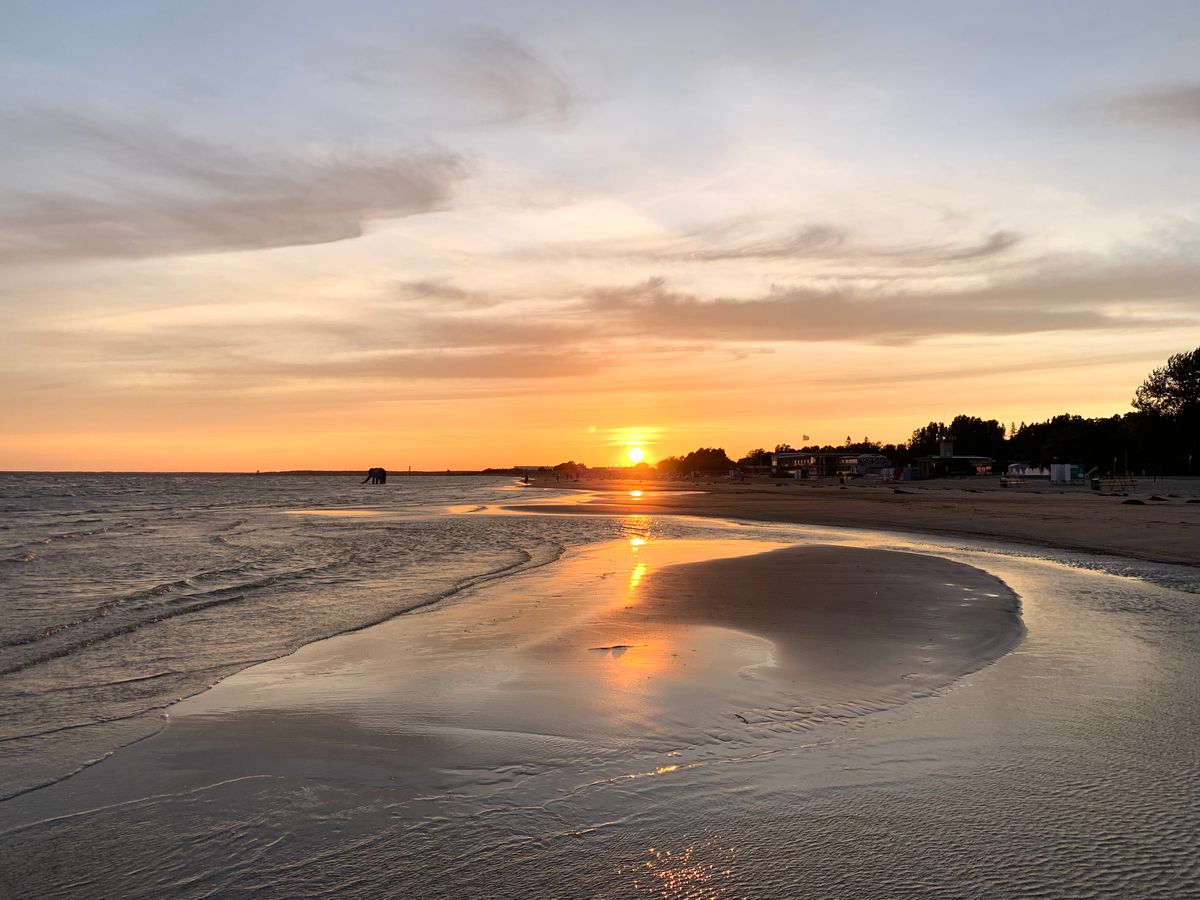
Estonia's biggest beach: fine sand and water shallow enough to wade a long way out. Free, and packed in July.
📍 Map & photos · €
Rüütli street and Old Town
The pedestrian spine, plus the 15th-century Red Tower and the Tallinn Gate, the last walled gate in the Baltics.
📍 Map & photos · €
Hedon Spa mud baths
The 1927 neoclassical mud-bath house, restored as a boutique spa on the beach. The mud treatment is the local ritual.
📍 Map & photos · €€€ · Website ↗
Pärnu Museum
Well-designed city history on the riverbank, running from Stone Age settlement through to Estonian independence.
📍 Map & photos · €€
Villa Ammende
A 1905 art nouveau villa turned hotel and restaurant, among the best-restored in the Baltics. Garden concerts in summer.
📍 Map & photos · €€€
Getting there
Coach from Tallinn
The main route. Buses run roughly hourly and take about two hours to the terminal beside the Old Town.
Coach from Riga
Pärnu sits on the Tallinn-Riga highway, so Riga buses stop here after about two and a half hours.
Drive or fly
Under two hours by car from Tallinn. Rail links are limited, so the coach usually beats the train.
When to go
Best time to go
Late June to mid-August, when the sea is swimmable and the beach bars open.
Cheapest months
October to April. Spas stay open and cost far less, but the beach is dark and empty.
Priciest & busiest
July, especially around the beach festivals. Book well ahead or stay inland.
If you've got one day
Morning
Swim or walk the beach early while it is quiet, then coffee along the promenade behind the dunes.
Late morning
Into the Old Town for Rüütli street, the Red Tower and the Tallinn Gate over the moat.
Lunch
Eat in the Old Town or the beach park; Pärnu punches above its weight for a town this size.
Afternoon
Book a mud treatment or a spa afternoon, the thing Pärnu has done since 1838.
Evening
Walk the 1.5 km mole out to the lighthouse for sunset, then drinks back on Rüütli.
Nearby & day trips
Soomaa National Park
An hour east: bog boardwalks and the fifth season, when spring floods let you canoe through flooded forest.
Kihnu Island
Bus and ferry to a small island where women in striped skirts ride motorbike sidecars; UNESCO-listed culture.
The full episode drops on our socials — follow along: