Galápagos · Things to do
Checked August 2026 · 6 official sources
THINGS TO DO
Nearly everything here is metered and permitted: two separate payments on the way in, a park rule that puts a licensed naturalist guide beside you at most sites, and a short list of places near the towns you can reach on your own.
The two arrival payments — park fee and TCT
They are separate and neither is optional. The Transit Control Card costs US$20, is bought at the Consejo de Gobierno counter in Quito or Guayaquil airport before you check in — individual tourists cannot buy it in advance, only agencies can, 48 hours ahead — and must be shown again on the way out. The National Park entrance fee is then collected by rangers on arrival at Baltra or San Cristóbal: US$200 for foreign adults, US$100 under 12, US$100/US$50 for CAN and Mercosur nationals, US$30 for Ecuadorian residents.
📍 Map & photos · $$$ · Website ↗
Which sites need a licensed naturalist guide
The first of the Park's fourteen mandatory visit rules is that visitors to protected areas must be accompanied by a naturalist guide authorised by the Park Directorate, and only authorised operators and boats may work in them — so every landing on an uninhabited island is a booked tour, not a thing you arrange yourself. Some sites near the towns work differently: Las Grietas is entered through a Bay Tour or a pre-coordinated organised group, and Laguna El Junco on San Cristóbal takes organised groups only, arranged at least 24 hours ahead.
Charles Darwin Research Station Exhibition Hall
On Avenida Charles Darwin at the eastern edge of Puerto Ayora, walkable from the harbour. Open every day 08:00–18:00 including public holidays, and free: displays on the giant tortoise breeding programme and the Station's collections, whale skeletons, a native garden and a café.
Tortuga Bay, Santa Cruz
Reached on foot from the western edge of Puerto Ayora along a paved trail, or by water taxi from the pier. The long open beach faces the swell; the sheltered cove at the far end, Playa Mansa, is the calm side, with marine iguanas along the rocks and kayaks for hire.
Santa Cruz highlands — tortoise reserves and lava tunnels
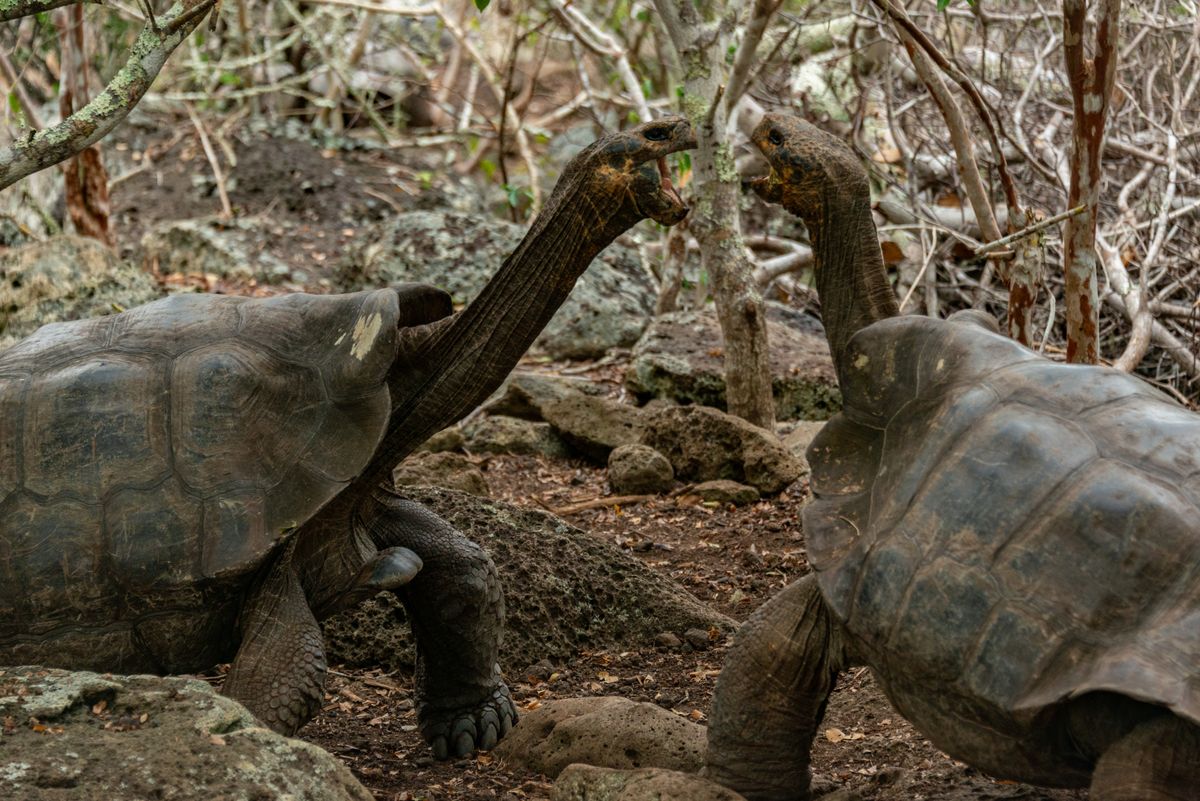
Half an hour up from Puerto Ayora by taxi, around Santa Rosa, private farms let wild giant tortoises graze across their pasture and charge a small entry to walk among them; several also open collapsed lava tubes you can walk through. Wellingtons are usually lent at the gate — the highlands are wet when the coast is dry.
📍 Map & photos · $$