Manuel Antonio · Things to do
Checked August 2026 · 6 official sources
THINGS TO DO
The national park is the reason people come and it needs planning days ahead; everything else — quieter beaches, mangroves and two whitewater rivers — is what you do on the days the park is full or shut.
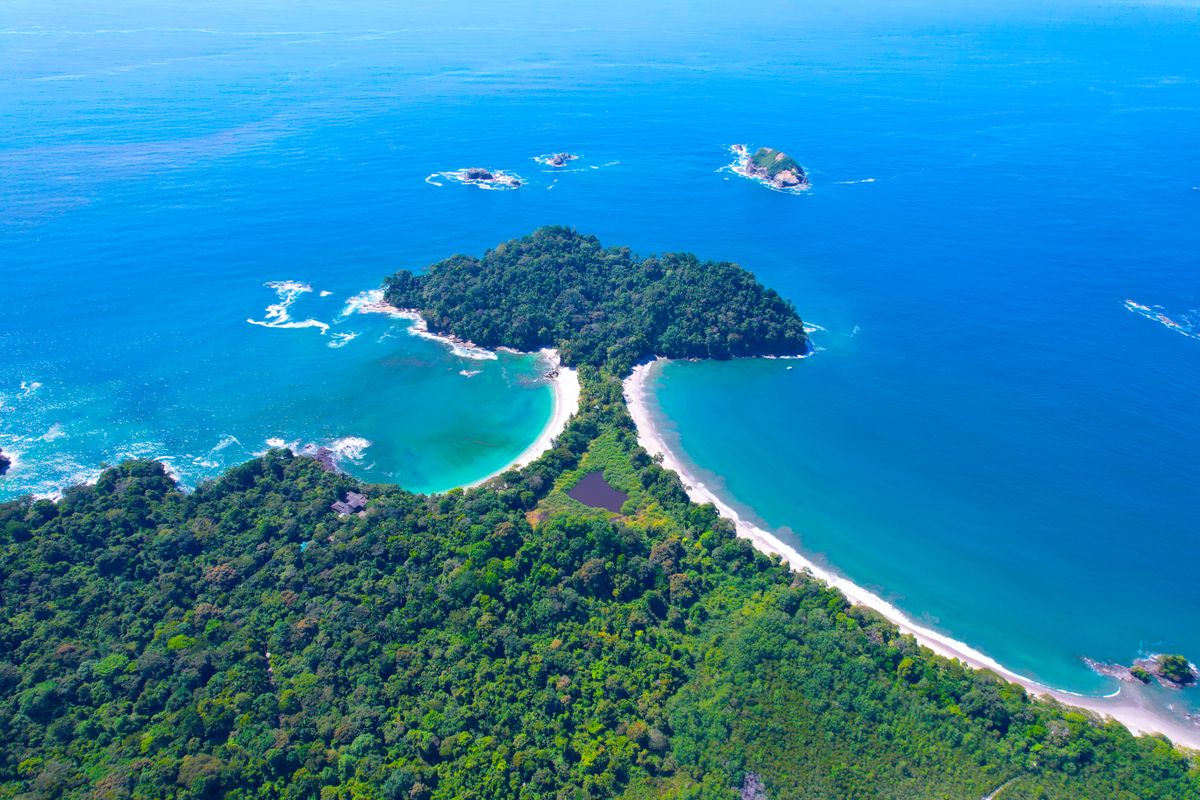
Manuel Antonio National Park
Costa Rica's smallest and busiest park: short forest trails leading to two sheltered swimming beaches, with squirrel monkeys, capuchins and sloths along the main path. Open Wednesday to Monday 07:00–15:00 and closed Tuesdays; daily numbers are capped and tickets are sold only in advance through SINAC's online system — $16 plus 13% IVA per foreign adult, $5 plus IVA for children 2–12 — so people who arrive at the gate without one are turned away.
📍 Map & photos · $$ · Website ↗
Playa Biesanz
A small, sheltered cove reached by a 10-minute path down through forest from the road near the Parador hotel, with calm water and no surf — the swimming beach to use on the day the park is closed. Free to enter; vendors rent chairs and there is no shop, so bring water.
Damas Island mangrove kayak
A paddle through the mangrove channels north of Quepos, timed to the tide, with good odds on white-faced monkeys, herons and crocodiles in the roots. Iguana Tours have run these since 1989 from their office in downtown Quepos, open 7:00–20:00.
📍 Map & photos · $$ · Website ↗
Rafting the Savegre or Naranjo
The Savegre runs year-round at Class I–II for families ($119) or Class II–III ($146); the Naranjo is Class III–IV from May to December ($134) and the harder Chorro section Class IV–V from January to April ($138). Prices are per person plus VAT and trips run private.
📍 Map & photos · $$$ · Website ↗
Playa Espadilla
The long public beach immediately outside the park gate — free, open when the park is not, and where the surf schools, chair rentals and beach vendors operate. The rip currents here are real and there is no permanent lifeguard, so stay in line with other swimmers.