Medellín · Things to do
Checked August 2026 · 7 official sources
THINGS TO DO
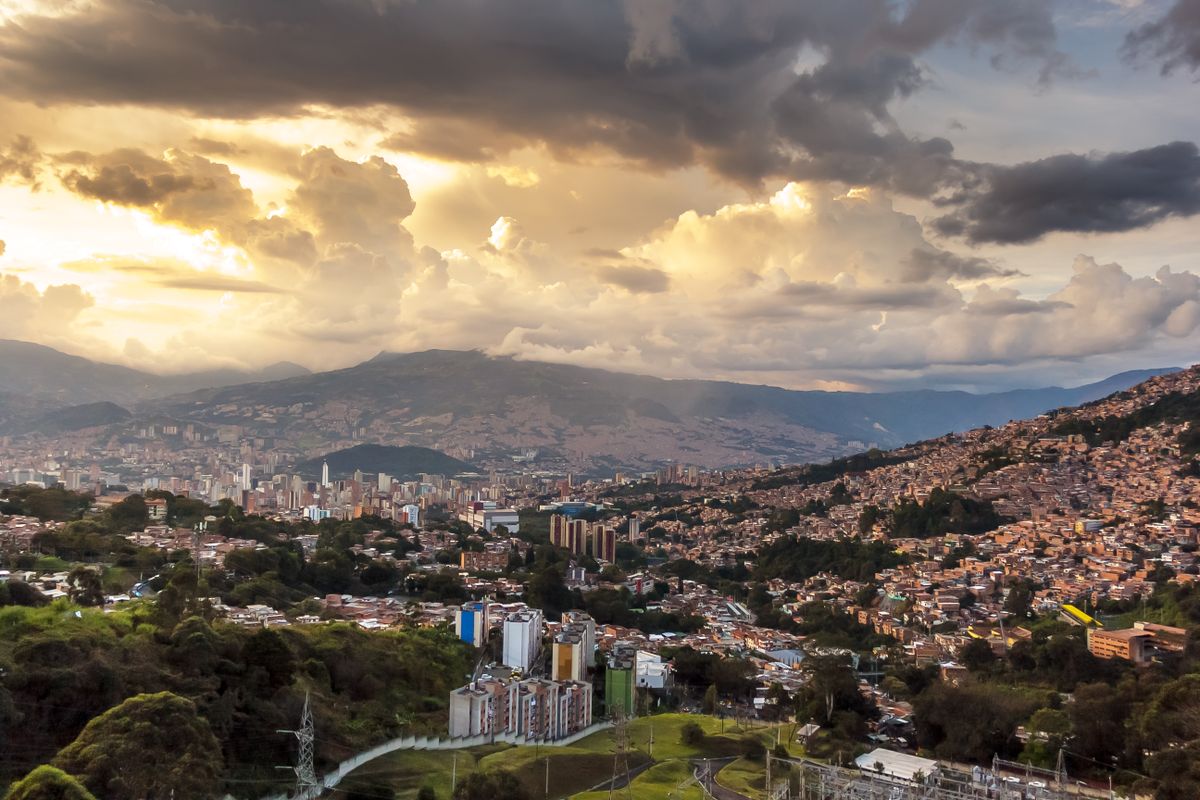
Medellín's best days are vertical — a metro that climbs the valley, cable cars strung over the hillside barrios, and a city that puts its own recent history in a free museum rather than a cartel tour.
Comuna 13
The Las Independencias hillside, where outdoor escalators were built to get residents up the slope and the walls filled with murals afterwards. Take Metro Line B to San Javier, then bus 221i or 225i, which stop two blocks from the escalators; local guides run the Graffitour from the same point.
Parque Arví by Metrocable
A forest reserve in Santa Elena reached by Metrocable Línea L from Santo Domingo, where the cable car climbing over the ridge and out of the valley is as much the point as the park. Tourist services run Wednesday to Monday 9:30am to 5:30pm and it closes on Tuesdays for maintenance.
📍 Map & photos · $ · Website ↗
Museo de Antioquia and Plaza Botero
Carrera 52 No. 52-43 in the centre, open Monday to Saturday 9:40am to 5:30pm and Sundays and holidays until 4:30pm, closed 1 January, 1 May and 25 December. The fat bronzes on Plaza Botero outside are free to walk among; the collection inside covers Botero and Colombian art more widely.
📍 Map & photos · $ · Website ↗
Museo Casa de la Memoria
A free museum at Calle 51 #36-66 in Parque Bicentenario documenting the armed conflict in Antioquia, with an archive of more than 1,400 testimonies and documents. Open Tuesday to Friday 9am to 6pm and weekends and holidays 10am to 4pm; it is the honest counterweight to Medellín's narco tourism.
Ride the metro and the Metrocables
Colombia's only metro, and the cable-car lines hanging off it were built as public transport for the hillside barrios rather than as a ride. A single fare is well under a dollar; Lines A and B cross at San Antonio, and Línea J out of San Javier is the cheapest good view over the valley you will get.
📍 Map & photos · $